
Why do your legs “lock up” when running after the sled?
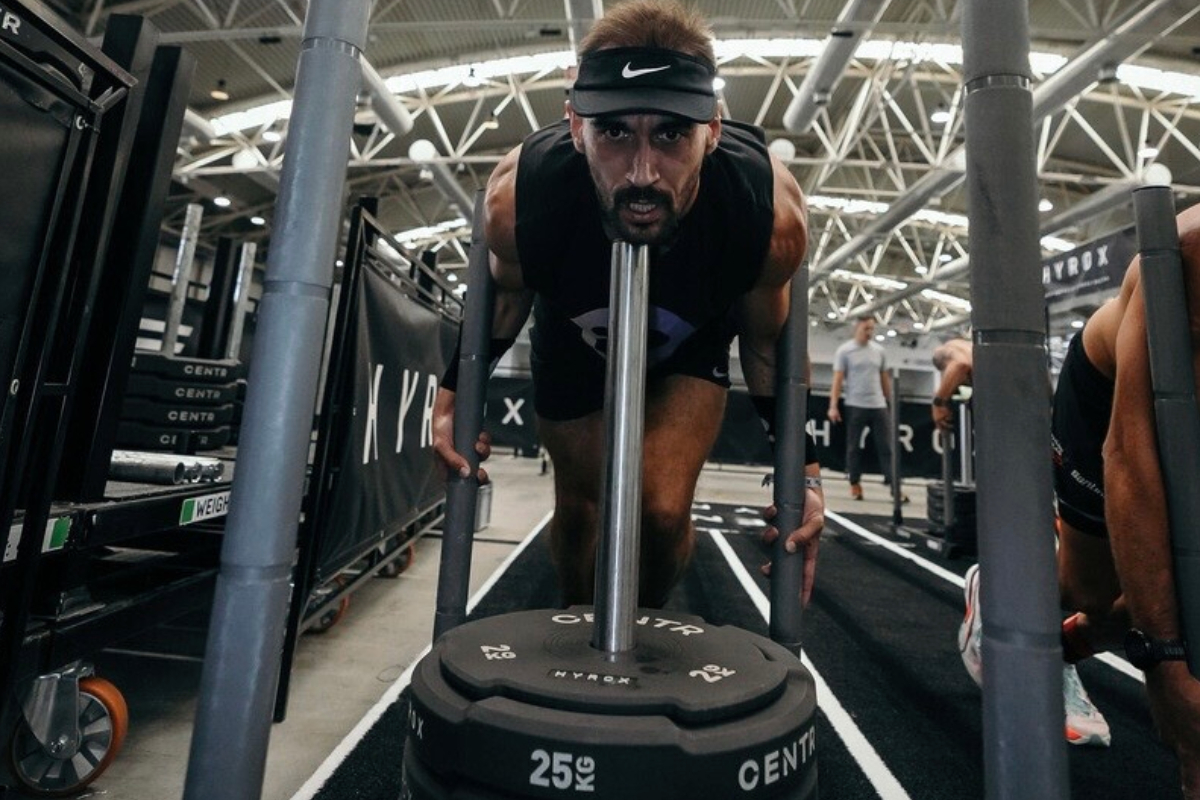
If you’ve experienced a sudden drop in pace, heavy legs, and intense fatigue when running immediately after a sled push or pull, you’re not alone. This phenomenon is not a matter of “poor fitness,” but rather the result of specific physiological mechanisms triggered by the sled.
Let’s break it down.
What do we mean by “lock up”?
By “lock up,” we refer to:
Reduced ability to produce force
A sudden drop in running pace after the sled
Increased perceived exertion (RPE)
A sensation of heavy, stiff legs and difficulty regaining pace
Why does the sled trigger it?
Sled push/pull work:
-Imposes high mechanical demands with prolonged muscular tension
-Creates conditions of functional restriction of blood flow and oxygen delivery
-Increases reliance on anaerobic ATP production
This leads to:
-Depletion of phosphocreatine (PCr)
-Accumulation of metabolites (Pi, H⁺)
All of the above directly reduce the muscle’s ability to produce force during the subsequent run.
What is usually responsible?
In most cases, it’s a combination of factors:
-Neuromuscular fatigue and disruption of muscle homeostasis
-Inadequate carbohydrate intake prior to the start
-Insufficient hydration and an imbalanced sodium–water status
Practical strategies for better performance
Carbohydrates:
1–4 g/kg consumed 1–4 hours before (low fiber & low fat).
~1 hour before: small amounts of carbohydrates and/or a carbohydrate mouth rinse.
During the event: 30–60 g/hour via isotonic drinks, gels, or chews
Hydration & Electrolytes
Goal: avoid dehydration greater than 2% of body mass
Sweat rate estimation via pre- and post-exercise body weight
5–10 mL of water/kg 2–4 hours before
Sodium added when necessary to enhance fluid retention
Supplements with evidence-based ergogenic effects
Caffeine: 3–6 mg/kg (~60 minutes before)
Sodium bicarbonate: 0.2–0.3 g/kg, 60–180 minutes before
Creatine (monohydrate): 3–5 g/day
Beta-alanine: 4–6 g/day
Beetroot juice: 6–8 mmol, 2–3 hours before
Conclusion
Leg “lock up” after the sled is not a matter of willpower.
It is the result of high mechanical and metabolic load, which can be effectively managed with proper fueling, hydration, and supplementation strategies.
At ATPLab Training, performance is built on data, not assumptions.